Free NewsletterPro Login

About Market Briefs

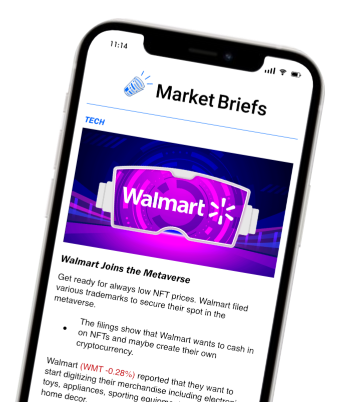
Market Briefs Newsletter Sample Financial Newsletter

With just five minutes over your morning cup of coffee, Market Briefs can get you completely up to speed with a daily newsletter that breaks down all of the top financial news from across the country, into an easy-to-read, digestible format.

Designed specifically for regular investors, you will find all of the relevant information you need to make savvy moves with your money!

What Is Market Briefs?

Market Briefs is a daily newsletter designed to keep regular investors informed and ready to make better investment decisions with better news. It covers news stories across real estate, crypto, stock and the global economy so there's something for everyone.

The best part? Market Briefs is free and can be read in 5 minutes or less.

Who Is The CEO Of Market Briefs?

Jaspreet Singh is the CEO of Briefs Media, LLC which owns Market Briefs, Briefs Academy, and Market Briefs Pro. You can learn more information about Briefs Media here.

What You'll Find In Market Briefs

Market Briefs is the ideal place for retail investors to learn all about what's happening in the economy, stock market news, real estate changes, cryptocurrency updates, and the global economy.

100,000's of retail investors are currently signed up to receive our Market Briefs, conveniently delivered to their inbox morning after morning.

The best part?

Market Briefs is completely free. Readers will never have to pay a dime to stay on top of the latest financial news – which is exactly as it should be. Financial education should be accessible to everyone regardless of the size of their portfolio.

Instead, you are only charged if you opt in for one of our sponsored products that keep this newsletter free for all.

At Market Briefs, we only promote brands and products that we believe will benefit our Briefers, so everything you read, from the content to the sponsors, is thoughtfully added, and reviewed.

This is how we keep our newsletter open for everyone to enjoy and learn from, but there’s no pressure for you to ever sign up unless you feel it’s the right move for you.

Why We Created Market Briefs As A Free Financial Newsletter

Much like the mission for The Minority Mindset, founder and CEO of Briefs Media, Jaspreet Singh, wanted to fill a gap that he saw in the market.

Financial news is, many times, geared toward the sophisticated institutional investor, but most regular people can’t understand the intricacies of what’s happening. Not to mention, the quantity of financial news is overwhelming!

There are over 5,000 news stories published every single day - most investors don't have time to read and analyze them all.

That’s where we come in! 

Read LESS News

The goal for Market Briefs is to create a simple newsletter that allows investors to be more aware of what's going on in the financial world without overcomplicating the news and without putting our Briefers to sleep.

Now, hundreds of thousands of people flock to their inboxes every morning, eager and ready to receive their financial news from their morning Market Briefs.

Are you ready to start making wiser financial decisions that stem from an educated standpoint, but you don’t have hours to comb through the Wall Street Journal, Yahoo Finance, CNBC, and Bloomberg to get the news?

Market Briefs is the financial newsletter you need if you only have a few minutes to learn more about the financial sector as a retail investor.

Become a Briefer today to start getting all of the news you need to make savvier decisions regarding your portfolio and investments!

Join us on:

Blogs

May 30, 2026
Financial Literacy Books That Actually Build Wealth
  • The best financial literacy books don't just teach budgeting, they shift how you think about money.
  • Two classics stand out: The Intelligent Investor for valuing investments, and Rich Dad Poor Dad for the owner's mindset.
  • Reading is only step one. The real wealth comes from acting on what you learn.
Read More
May 30, 2026
What Is a Roth Conversion? A Simple Guide
  • A Roth conversion moves money from a traditional retirement account into a Roth account.
  • You pay taxes on the money now, in exchange for tax-free growth and withdrawals later.
  • It can pay off if you expect higher taxes or more income in the future, but the timing and tax hit matter a lot.
Read More
May 30, 2026
Trailing Stop Loss: How to Protect Your Gains
  • A trailing stop loss is an order that automatically sells a stock if it falls a set percentage from its recent high.
  • As the stock rises, the sell point rises with it, locking in gains while capping losses.
  • It's most useful for active strategies like momentum investing, not for long-term buy-and-hold.
Read More
May 30, 2026
5 Types of Wealth: Why Money Is Only One of Them
  • Real wealth is more than a bank balance. It spans your finances, health, mind, purpose, and freedom.
  • Money is powerful, but it amplifies the life you already have rather than fixing a broken one.
  • True financial wealth means your cash flow covers your expenses, so your money works while you live.
Read More
May 30, 2026
How to Invest in Private Equity: A Beginner's Guide
  • Private equity means investing in companies that aren't listed on the stock market.
  • Traditional private equity is built for experienced, high-net-worth investors with large amounts to invest.
  • New rules have opened more accessible paths, like startup crowdfunding and real estate deals, often starting around $100.
Read More
May 30, 2026
What Is a Call Option? A Simple Guide With Examples
  • A call option gives you the right to buy a stock at a set price by a set date.
  • Investors buy calls when they expect a stock to rise, using less money than buying the shares outright.
  • The most you can lose buying a call is the premium, but time works against you, so it's an advanced tool.
Read More
May 30, 2026
EBITDA Formula: How to Calculate It Step by Step
  • EBITDA stands for Earnings Before Interest, Taxes, Depreciation, and Amortization, a measure of a company's core profit.
  • The formula adds those four items back to net income to show what the underlying business earns.
  • Investors use EBITDA to compare companies and to judge how many times earnings a stock is selling for.
Read More
May 30, 2026
What Is a Stock Option? A Plain-English Guide
  • A stock option is a contract giving you the right, but not the obligation, to buy or sell a stock at a set price by a set date.
  • There are two types: calls (the right to buy) and puts (the right to sell).
  • Options are powerful but risky, so they suit investors who already have the basics down.
Read More
May 30, 2026
Put Option: What It Is and How It Works
  • A put option gives you the right to sell a stock at a set price by a set date.
  • Investors use puts to bet a stock will fall, or as insurance to protect shares they own.
  • The most you can lose buying a put is the premium you paid, which makes it a defined-risk tool.
Read More
May 30, 2026
Operating Margin: What It Is and How to Calculate It
  • Operating margin shows how much profit a company keeps from its core business after paying its running costs.
  • The formula is operating income divided by revenue, shown as a percent.
  • A strong, steady operating margin signals a well-run business that controls its costs.
Read More
1 2 3 22